Product guide ·
SPC Wall Boards in Terrazzo, Marble and Concrete Looks: TVD-1414, TVD-1415 and TVD-1416
Three wall boards, each shown with four finishes. Here is how to choose a look and what to settle on fixing, corners and fire rules.
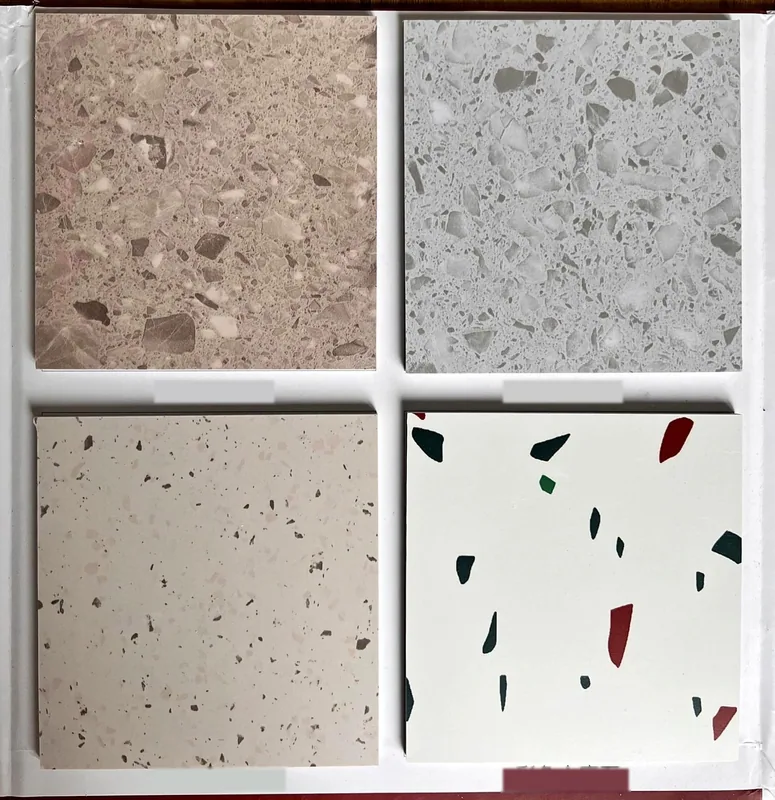
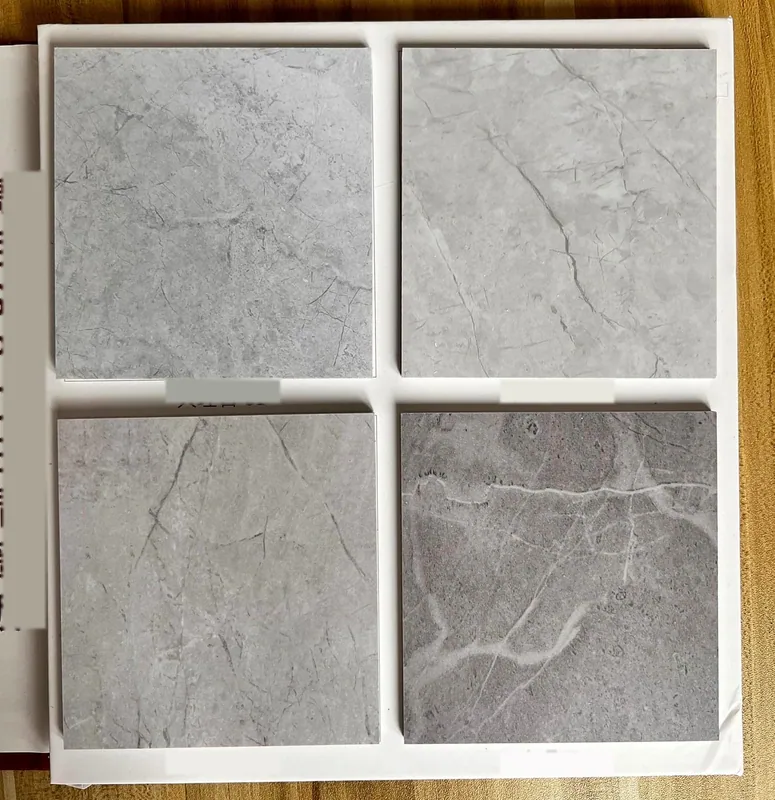
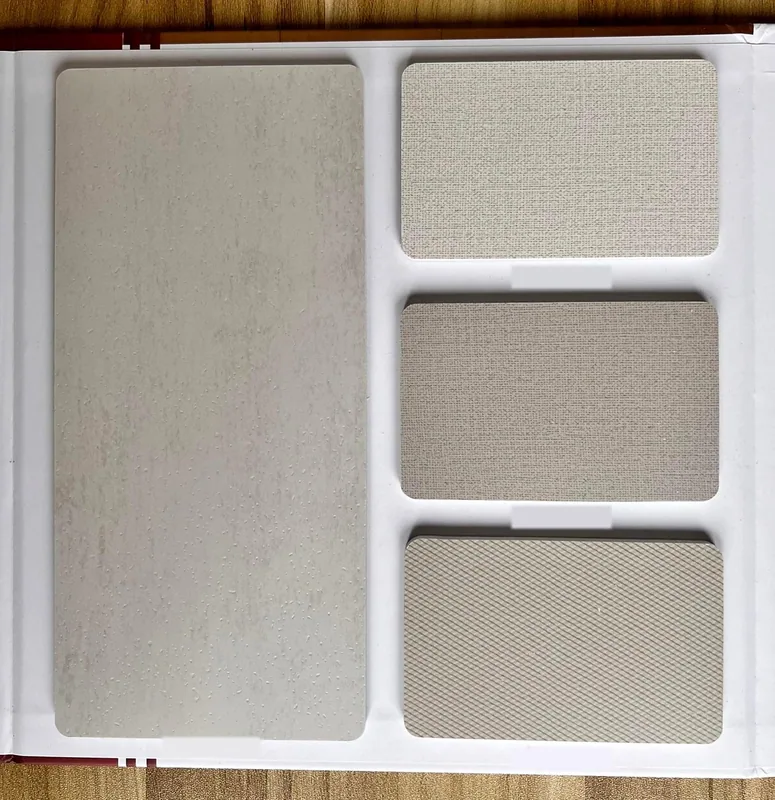
Wall boards sit in an odd corner of the flooring chapter: made of the same stone-plastic material as rigid floors, but meant for vertical surfaces. Our three are SPC Wall Board: Terrazzo, Wood & Solid (TVD-1414), SPC Wall Board: Marble Looks (TVD-1415) and SPC Wall Board: Concrete & Stone (TVD-1416). Each listing reads stone-plastic (SPC) wall board, sample board shows four finishes, interior wall and decor use.
What the listing means
Stone-plastic (SPC) wall board. A rigid board with a decorative surface, made to be fixed to a wall. The listing does not give thickness, panel size or edge profile, so those come first on the quote request, as the line's advice says.
Sample board shows four finishes. Each code is a family of four looks, shown on one sample board. That helps a buyer see the range at once, and it raises a question: are the four finishes sold together in one carton, or separately? Ask, and state which of the four you want for each wall.
Interior wall and decor use. The use is interior. Nothing in the listing says the boards are suited to exteriors, wet walls or ceilings, and we do not suggest it. If you plan a shower surround or a commercial kitchen wall, ask the factory for written guidance first.
Three families, three moods
| Code | Looks | Where it tends to land |
|---|---|---|
| TVD-1414 | Terrazzo, wood and solid colours | Feature walls, retail counters, reception backdrops |
| TVD-1415 | Marble looks | Entries, lobbies, bath and vanity backdrops |
| TVD-1416 | Concrete and stone | Restaurants, studios, industrial-style interiors |
TVD-1414 is the most varied: terrazzo, wood and solid together make it the family a designer picks when a scheme needs more than one surface. TVD-1415 is the one for a polished look and has the most obvious pattern repeat to watch for. TVD-1416 suits spaces that want a raw, quiet finish.
Who buys it
Interior designers and shopfitters who want a hard, wipeable wall finish without tile and grout. Builders finishing condominium lobbies and amenity rooms. Retailers displaying products against a styled backdrop. Property managers refreshing common areas. The list of buyers in our line data is short, and the products are decor-led, so most orders will be project-based rather than shelf stock.
Quote checklist
- Board thickness, panel size and weight, and the edge profile.
- Surface finish, gloss level and the four finishes in each family, with codes.
- How the boards are fixed: adhesive, clips or trims, and what the factory supplies.
- Matching corner, end and edge profiles in the same colour.
- Pattern repeat, and how many different faces are in a carton.
- Flame-spread test report, and slip or abrasion data if relevant.
- Core composition; formaldehyde data if composite wood is present.
- Panels per carton, cartons per pallet, pallets per container; warranty and lead time.
Fixing and finishing
The line's advice is to ask how the boards are fixed, with adhesive, clips or trims, and whether matching corner and end profiles exist in the same colour. Both matter on a wall. Adhesive suits a smooth, sound substrate; clips suit a wall that is not perfectly flat. Corners, ends and junctions are where a wall board looks professional or improvised. Ask for the profile drawing, and order trims with the boards from one lot.
Canadian use notes
Interior wall finishes are subject to the National Building Code of Canada, adopted with changes by each province. It limits the flame-spread rating of interior wall and ceiling finishes, tested to CAN/ULC-S102, with limits that depend on the building use; exits and corridors are the strictest. An ASTM E84 report is the US test, and Canadian officials usually want CAN/ULC-S102 results or review E84 case by case. Do not describe any wall board as non-combustible unless a test says so. Ask your designer or building official what your project requires. See our SPC wall board compliance guide for the document list. No certificate is on file for any of the three boards, so we make no certification claim; we confirm status and documents with the quote.
Heated Canadian interiors swing from dry winter to humid summer, and wall boards fixed rigidly need movement allowance at edges, which the factory's instructions cover. Product arrives by sea at Vancouver or Prince Rupert and travels by rail or truck. Boards are heavy: check the unloading and the lift. The landed cost calculator shows the steps, and the sales tax guide covers provincial tax.
Ordering
A quote request with finishes, wall areas and delivery address starts the process. We reply in writing with price, packing, certification status, documents, lead time and delivered cost. Samples are available on most items, normally credited to the first order, and trial minimums are low on many lines, which suits a feature wall. Payment is 30% deposit and 70% before release. How ordering works has the steps. Browse the SPC wall board line and the flooring wholesale guide. Rules change, so confirm with your inspector or customs broker. This is not legal advice.