Certification guide ·
Engineered Wood Flooring in Canada: What You Need on File Before It Ships
Engineered boards look like timber but are regulated as composite wood. This guide lists the rules that touch the range, the documents worth requesting, and where our products differ.
A pallet of engineered oak flooring arrives at a Canadian warehouse as a wood product, and gets treated as something else by the rules. The core is composite wood, the surface carries a factory coating, and the board goes into a building that has a fire code. Each of those facts brings its own paperwork. This guide walks through them for the twelve boards in our engineered wood flooring line.
Where our boards stand today
None of the engineered boards in this line has a certificate on file. That covers Flagship Oak Engineered Flooring (TVD-1620), Gratitude Series Engineered Flooring (TVD-1621), Mansion Series Wide-Plank Flooring (TVD-1626), Northern Europe Series Flooring (TVD-1628), and the herringbone, chevron, butterfly and wide-format boards between them (TVD-1622 to TVD-1631). So this guide makes no claim that any board is certified or compliant. For each quote we ask the factory for the documents below, confirm what exists, and send it with the quote before you order.
Rule 1: formaldehyde emissions from composite wood
Canada's regulations on formaldehyde emissions from composite wood products have applied since 2023. They cover hardwood plywood, particleboard, MDF and laminated products, and by extension the cores of engineered and laminate flooring. Products must meet emission limits, be certified by an approved third-party certifier and be labelled. The practical request to a factory is a TSCA Title VI or Canadian compliance certificate for the core, with the certifier named and the certificate current. A multi-layer board may use plywood in its core, which is the reason the question applies to this whole line.
Rule 2: flame spread in the building
The National Building Code of Canada, as adopted with changes by each province, limits the flame-spread rating of interior finishes. Floor coverings are tested to CAN/ULC-S102.2. The limit depends on the building use and location; corridors and exits are strictest. An ASTM E84 report is the US test, and Canadian building officials may accept it case by case, though a CAN/ULC result is what most designers ask for. A house with a standard residential layout seldom faces a problem. A commercial corridor may. Confirm with the designer or building official what your project requires.
Rule 3: coatings and general product safety
The finish on each board matters under the Canada Consumer Product Safety Act, which prohibits products that are a danger to health or safety and obliges incident reporting. The Surface Coating Materials Regulations set limits on lead and mercury in coatings on furniture and children's products, and some buyers ask for the same test report on flooring finishes as a precaution. Ask for it if your customer is a school, a daycare or a children's retailer.
Rule 4: labelling and packaging
Boards sold as prepackaged consumer products need bilingual product identity and net quantity, with the dealer's name and place of business, under the Consumer Packaging and Labelling Act. In Quebec, the Charter of the French language expects labels, instructions and warranty papers to be available in French. A retailer who sells cartons off a shelf should check that the carton labels meet both before the first pallet is delivered.
Documents to request: checklist table
| Document | Why you need it | Who issues it |
|---|---|---|
| Composite wood formaldehyde certificate (TSCA Title VI or Canadian equivalent) | Shows the core meets emission limits and has a certifier | Approved third-party certifier, via the factory |
| Flame-spread test report (CAN/ULC-S102.2, or E84 for review) | Building officials check finishes against the code | Accredited test laboratory |
| Coating test report for lead and mercury | Surface Coating Materials Regulations; school and child-care buyers | Test laboratory |
| Bilingual carton label proof | Consumer Packaging and Labelling Act; Quebec French rules | Factory artwork, approved by you |
| Installation and acclimatizing instructions | Warranty depends on correct installation | Factory; we request it with the quote |
| Wear-layer and construction data sheet | Lets you compare boards fairly | Factory |
How the boards differ in regulatory terms
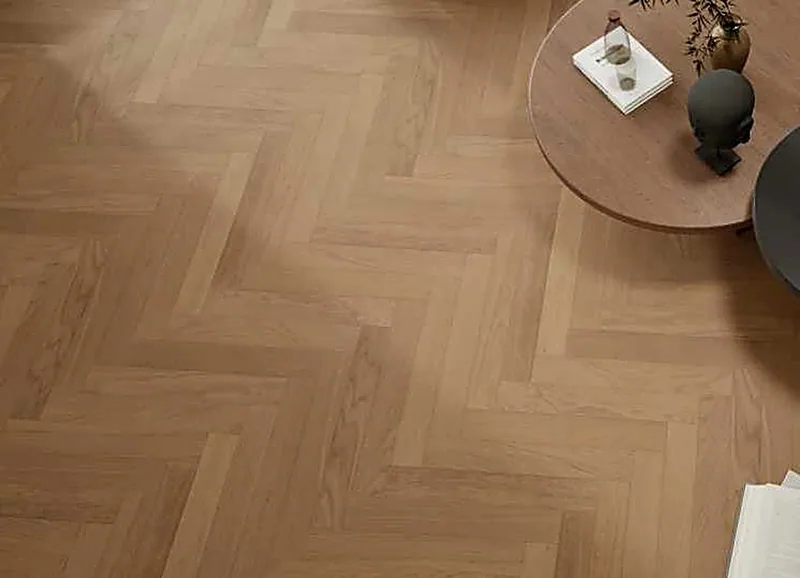
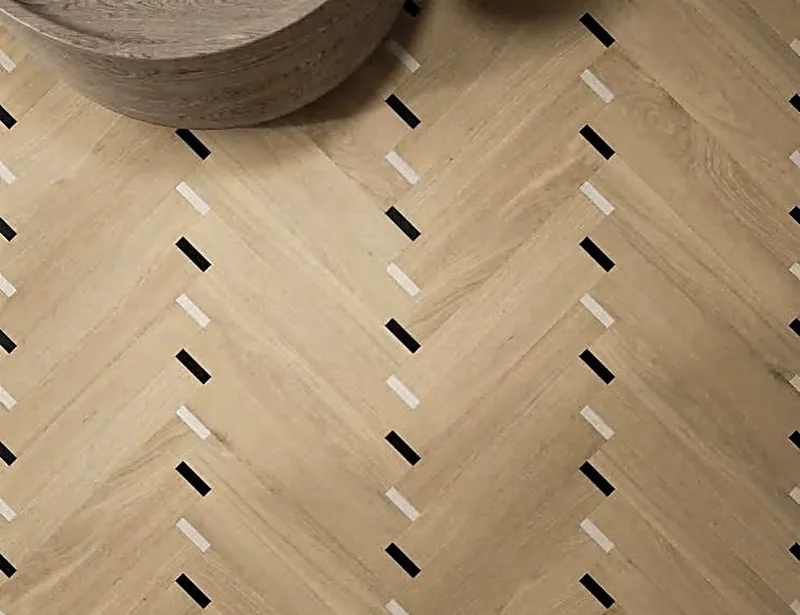
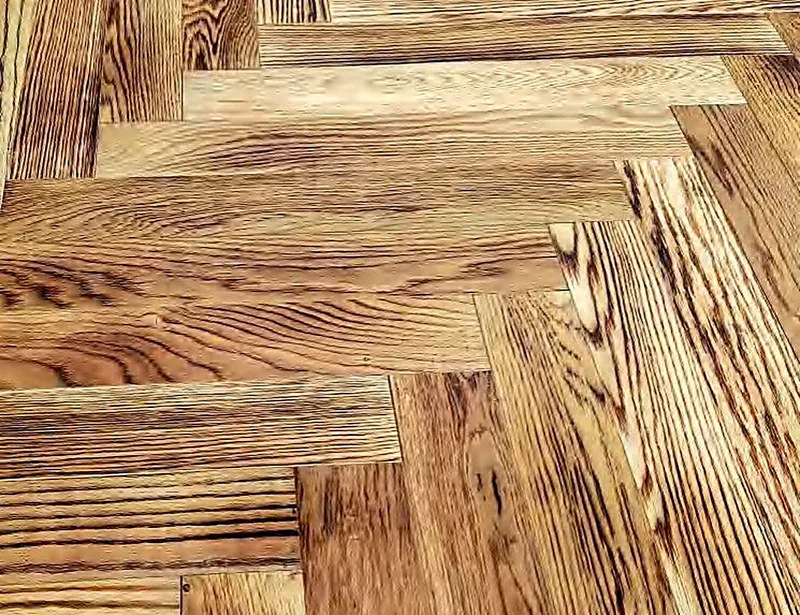
Most differences are not about the law at all but about what you need to ask. TVD-1628 lists smoked, oiled and rough-sawn looks, and oiled surfaces behave differently on installation, so ask about coating data. TVD-1626 lists a wood wax finish on extra-large planks, which raises the question of acclimatization for a wide board. The herringbone and chevron boards (TVD-1622, TVD-1623, TVD-1624) need left and right pieces in a set ratio, which is a packing question, not a legal one. TVD-1627, an American red oak board, is a different species from the European white oak boards, and species may appear on labels and in tender specifications.
Provincial differences
Building codes are adopted with changes by each province, and Quebec, Ontario, British Columbia and Alberta have their own. The flame-spread limit your project meets can differ accordingly, and so can who inspects. Quebec buyers should expect French on documents. Rules for the product itself, such as formaldehyde, are federal. Ask your building official which code edition governs.
What happens if a document is missing
A building official may refuse a finish that cannot show a test report. A retailer may refuse to list a floor whose carton labels fail the bilingual rule. A customs broker may hold a shipment while classification is confirmed. A missing formaldehyde certificate is the most expensive of the lot, because it can stop a sale of boards already in the warehouse. That is why we ask before we ship, not after.
How we handle it
Every quote is written. It states specification, certification status, documents to follow, packing, lead time and delivered cost. We use a customs broker to confirm the tariff classification before quoting delivered cost, and sales tax follows the province of delivery, explained in our sales tax guide. For marks that apply to electrical goods, see CSA, cUL and cETL marks explained; flooring itself is not an electrical product. Per-product detail is in the TVD-1620 certification guide and the TVD-1620 buying guide. Rules change; confirm with your building official or broker. This is not legal advice. Start with a quote request, or compare the wholesale guide.