Certification guide ·
Large-Hopper Vegetable Cutter: Electrical and Food-Contact Checks for Canada
A motor, a hopper and a set of changeable discs: each needs its own paperwork. This is what to ask for on TVD-10818.
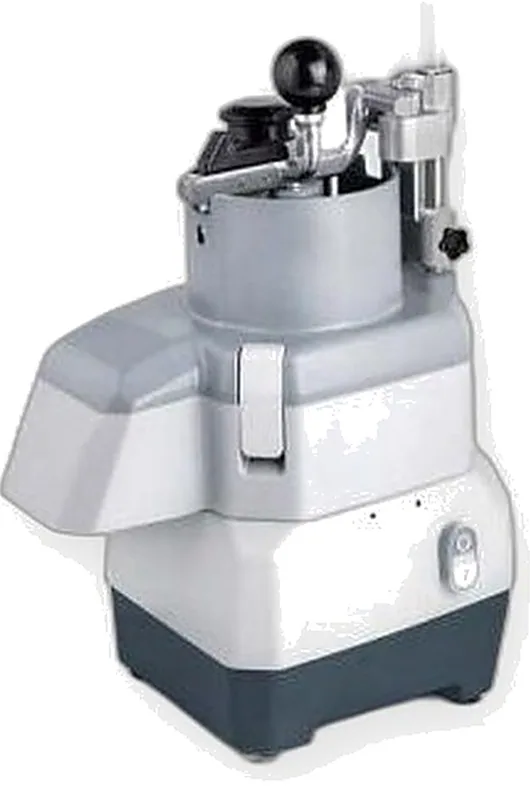
Anything with a rotating blade and a food hopper has two safety stories: the one the electrician reads and the one the health inspector reads. The Vegetable Cutter, Large Hopper (TVD-10818) offers slice, dice and shred cuts with interchangeable discs for prep kitchens, and no certification mark is on file for it. This post lays out how to check that a machine like this will pass both inspections in Canada.
The machine has a motor, so electrical rules come first
Our listing does not list the motor details, so voltage, phase, frequency and amperage are confirmed on the written quote. Whatever those are, a powered cutter in a Canadian kitchen needs a certification mark from a body accredited by the Standards Council of Canada, such as CSA, cUL or cETL, or a field evaluation label. A US-only mark, or a CE mark alone, does not meet the requirement. Provincial authorities, for instance the Electrical Safety Authority in Ontario, enforce it, and inspectors can refuse equipment without one. For a refresher on reading labels, see CSA, cUL and cETL marks explained.
Supply is the next catch. Canada uses 120 V and 240 V single-phase and 208 V or 600 V three-phase, at 60 Hz. A cutter rated 220 V and 50 Hz must be confirmed as built for Canadian supply, because motors can misbehave on 60 Hz.
Interchangeable discs mean a changing food-contact list
Unlike a fixed machine, a cutter's food-contact surface changes whenever a disc goes in. That makes the disc set part of the certification conversation:
- Ask for the material of every disc, the hopper, the pusher and the discharge area.
- Ask whether spare or replacement discs are made from the same material as those supplied.
- Request food-contact test reports from the factory, such as FDA or EU migration tests, for metals and any plastic parts.
Health Canada does not pre-approve kitchenware, and the Food and Drugs Act prohibits selling food in or with materials that may make it harmful, so test reports are the evidence a careful buyer asks for.
What the public health inspector wants to see
Provincial food premises rules and local inspectors look for durable, easy-to-clean equipment kept sanitary. Many also ask for NSF/ANSI or equivalent sanitation certification on commercial food equipment, and some landlords or franchisors insist on it. A cutter that comes apart for washing without tools, with no hidden crevices around the hopper, is easier to defend. We report what sanitation documents exist for this unit rather than imply that one does.
Document table for TVD-10818
| Document | Why you want it | Who issues it |
|---|---|---|
| Electrical mark on the rating plate (CSA, cUL or cETL) or field evaluation label | Needed to energize the machine and satisfy the insurer | Accredited certification body, or field evaluation body |
| Rating plate details: voltage, phase, Hz, amperage | Confirms the machine suits your panel and 60 Hz supply | Factory data, repeated on our quote |
| Material list for discs, hopper, pusher and housing | Lets you answer the health unit item by item | Factory, requested by us |
| Food-contact test report | Evidence that food-touching parts are suitable | Factory test laboratory |
| Sanitation certificate, if your health unit asks | Often a lease or franchise condition | Sanitation certifier; we confirm whether one exists |
| Guarding and interlock description | Helps staff training and your own risk file | Factory manual, in French for Quebec orders |
Provincial notes
Electrical inspection and food premises inspection are both provincial or local, so the specific wording changes between regions. In Quebec the Charter of the French language also applies: manuals, labels and warranty documents must be available in French, and retailers or institutions will ask. We provide quotes and product pages in English, with French support on request.
What if something is missing
- An inspector can refuse to approve the machine for use until it is evaluated.
- A health unit may ask you to remove a disc or part whose material is unknown.
- An institution's purchasing office may reject the delivery if the sanitation paper it asked for is absent.
- Missing French documents hold up a Quebec installation.
Our process
We confirm certification status and supply the documents with the quote before you order. If a field evaluation is the route, we say so up front. Payment is 30% deposit and 70% before release, with delivery to your site across Canada. See how ordering works, price your landed cost with the landed cost calculator, read the sales tax by province guide, and send a quote request. You can browse the full Commercial Kitchen Equipment line, including the Tilting Kettle & Braising Pan (TVD-597) and the Combi Oven (TVD-596), which often share a kitchen with a cutter. See the certification post for the gas range with oven for how the gas route differs, and the certification post for the double-tank fryer for another powered unit.
Rules change, so confirm requirements with your electrical authority, health inspector or customs broker. This is general information and not legal advice.