Product guide ·
Double-wall cup with ring or foot handle (TVD-1949): choosing the right style
One product, two silhouettes: a ring-handle cup and a footed cup, both double-wall glass. See which suits your menu and what to confirm on the quote.
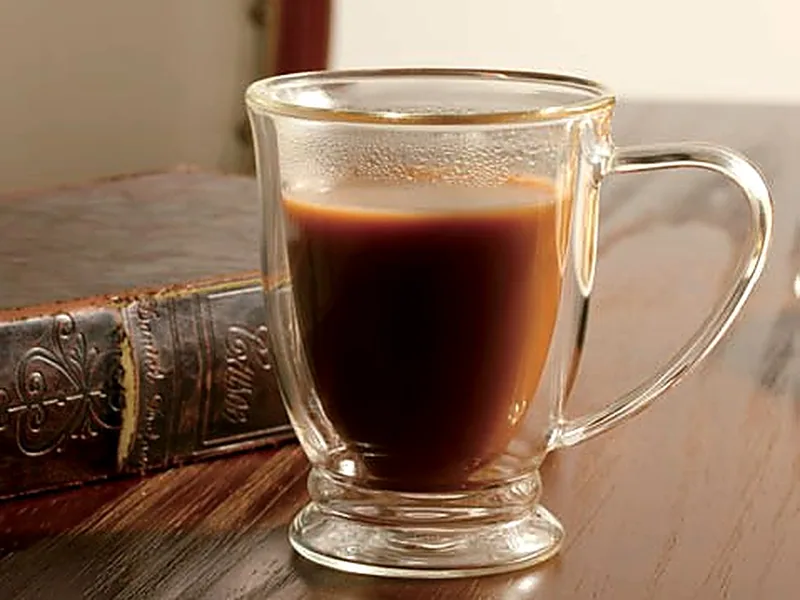
Most double-wall glass cups come in one shape. The Double-Wall Cup – Ring or Foot Handle (TVD-1949) gives you two: a ring-handle style and a footed style, both in double-wall glass for hot and cold drinks. A ring handle is a small loop that a finger passes through, with no solid grip. A foot is a short stem and base that lifts the glass off the table. These two details change how the cup looks on a tray, how it feels in the hand and how it behaves in a dishwasher, so this guide is built around those choices.
Ring handle and foot: what each is for
The ring-handle style
A ring handle suits a tea-and-coffee service where the look matters. It is light, it shows more of the glass and it photographs well. The trade-off is grip: a ring is a lighter hold than a full handle, so confirm the inner diameter on the quote and test it with larger hands on your sample. This style tends to be chosen by boutique cafés, tea rooms and gift retailers who sell by appearance.
The footed style
The footed cup lifts the drink and gives a dessert-glass look. It works for cappuccino, hot chocolate with cream, affogato and layered cold drinks. Footed glass is also easier to carry by the base. Ask about the stability of the foot on a tray and how footed glasses stack and pack, because a stem is a natural break point in transit.
Who should stock it
Our listing points this line at cafés, retailers and hotels. A dessert bar can use the footed style for affogato and layered drinks. A hotel breakfast service can match ring-handle cups to a boutique look. A gift shop can sell either as a pair. Because it handles hot and cold drinks, a venue with both a coffee menu and a cold-drink menu can buy a single glass for both.
A specification checklist for TVD-1949
| Ask about | Why it matters for this cup |
|---|---|
| Capacity of each style | The ring-handle and footed versions may not hold the same amount; match each to a drink on your menu |
| Ring inner diameter | Decides whether an adult finger fits comfortably |
| Foot diameter and height | Decides stability on trays and in saucers |
| Hot-drink guidance | The factory should state any temperature limit for double-wall glass |
| Washing guidance | Hand washing or dishwasher use affects how long the glass lasts |
| Packing | Dividers or boxes, because stems and rings are the weakest points in transit |
| Lead and cadmium report | Needed for any glass that touches food or drink |
Where it sits in the line
If your customers prefer a full grip, the Double-Wall Latte Glass with Handle (TVD-1946) and the Double-Wall Mug – Classic (TVD-1944) are the sturdier choices. For a teardrop-curved look, try the Double-Wall Teardrop Tea & Coffee Cup (TVD-1951). The Irish Coffee Glass with Silicone Lid (TVD-1969) is the footed option when you also want a lid. The round handleless cup (TVD-1936) is the simplest alternative when you want no handle at all. The ring-or-foot cup is the one to choose when you want visible shape variety in a single product.
Canadian rules and what buyers ask for
Because it is drinkware, TVD-1949 sits under the Glazed Ceramics and Glassware Regulations, which limit lead and cadmium that can leach from glassware that contacts food. Printed or metallic decorations near the lip are the known risk, so if a version you order has any decoration, request a lead and cadmium report for it. The Food and Drugs Act prohibits selling food in or with materials that may make it harmful, and Health Canada does not pre-approve kitchenware; buyers commonly ask the factory for food-contact test reports. No certification mark is on file for this product, so we do not claim one. We confirm certification status and supply documents with the quote before you order. For gift-boxed sets, the Consumer Packaging and Labelling Act requires bilingual identity and net quantity and the dealer's name and place of business; in Quebec, labels and instructions must be available in French. Rules change; confirm with the authority or your customs broker. This is not legal advice. Read the Canadian rules for double-wall glassware for the whole line.
Canadian use notes
Hotels and restaurants in Canada typically run commercial dishwashers, so test the sample through your own cycle. In cold months, freight can arrive frozen; let the cartons warm before use. Where footed stems are involved, ask for divider packing, since the line's buying tip also recommends gift boxes or dividers to limit breakage in transit.
How ordering works
Every order is quoted in writing for the style split, quantity and delivery address; pricing is never posted. The quote also confirms lead time, packing, and certification status with documents. Many lines have low trial minimums, samples are available on most items and the sample cost is usually credited to the first order. Payment is 30% deposit and 70% before release, and this glass can share a container with products from other factories. See how ordering works, estimate with the landed cost calculator, and check provincial tax in the sales tax by province guide. Request a quote stating how many ring-handle and footed cups you want. More choices are in the Double-Wall Glassware line and the Home Kitchen & Tableware.