Product guide ·
Double-wall latte glass with handle (TVD-1946): what cafés and retailers should specify
A tall double-wall latte glass with plain, twisted or wavy handles. Learn which style fits your venue and what to confirm before ordering.
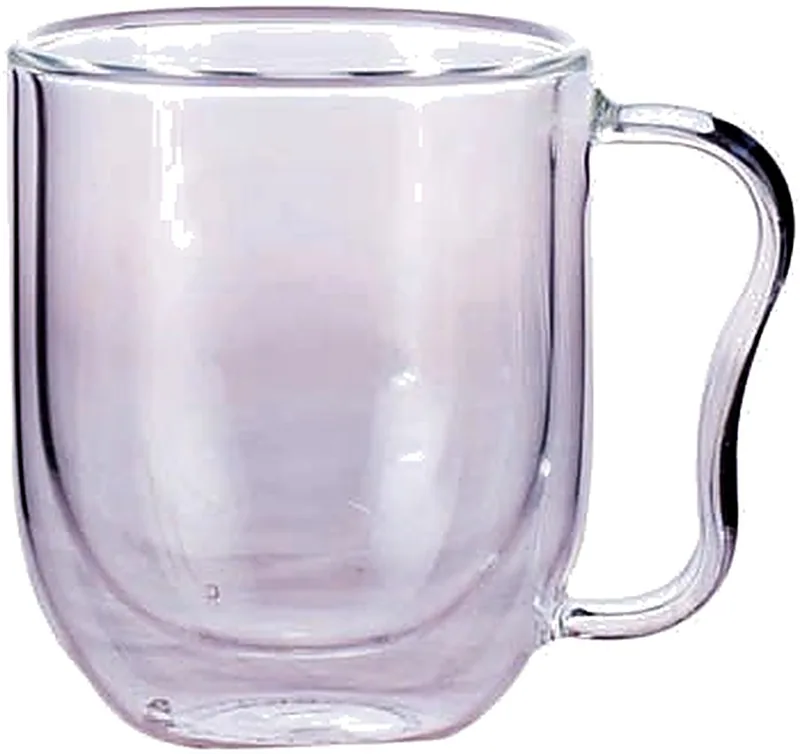
The Double-Wall Latte Glass with Handle (TVD-1946) is a tall double-wall latte glass that comes in plain, twisted or wavy handle styles, with several shapes in the range. It is a drink-service glass first: tall enough to show layers of espresso and milk, handled so the barista can serve it without a saucer fuss, and double-walled so the hand holds a warm drink comfortably. This guide is written for the café owner, the restaurant buyer and the gift retailer who needs to decide whether to stock it and what to ask on the quote.
Why a tall latte glass sells
A latte is a visual drink. Customers photograph the layers, and a clear tall glass shows them. A double-wall body keeps the outside of the glass from becoming too hot to hold and slows the cooling of the drink inside. Our product listing points the Double-Wall Glassware line at cafés, retailers and hotels, and this glass suits all three: cafés for table service, hotels for breakfast buffets and room service, and retailers who sell it as a gift set to people who make coffee at home.
Handle styles: the practical choice
The handle is where this product differs from a plain tumbler. The listed styles are plain, twisted and wavy, with several shapes in the range.
- Plain handle: the safest for a busy bar. It is easy to grip with wet hands and easy to rack, and it suits a menu that wants to look clean and modern.
- Twisted handle: a decorative profile that photographs well. It suits boutique cafés and gift sets, but check how it nests in a dishwasher rack.
- Wavy handle: the most distinctive look. Ask your sample how it feels in a small hand, because a curved profile that looks elegant can be less comfortable under load.
Because the range includes several shapes, decide on one handle style per venue so the table looks consistent, or deliberately mix them for a boutique effect. Which styles and shapes are available in your quantity is confirmed on your written quote.
What to specify on the quote
- Capacity. The listing says tall; the actual millilitres per shape come on the quote. Match the size to your recipes, because a latte with extra milk and a small cortado need different glasses.
- Glass type. Confirm the material and any temperature limits the factory states for hot drinks.
- Handle joint. Ask how the handle is attached and request a pull or thermal-shock result if the factory has one.
- Cleaning. Confirm whether the factory recommends hand washing and what a commercial dishwasher cycle does to double-wall glass.
- Variation. Double-wall glass is typically hand-made, so ask what weight and capacity variation to expect and whether it is acceptable for your cup sizing.
- Packing. Individual boxes or dividers, carton quantity and barcode.
How it compares with the rest of the line
If you want a wider mouth for cappuccino, look at the Double-Wall Cappuccino Cup (TVD-1947). For a rounded classic profile, the Double-Wall Mug – Classic (TVD-1944) has an easy-grip clear handle. For tea and espresso service in a more curved shape, the Double-Wall Teardrop Tea & Coffee Cup (TVD-1951) is the one to sample next, and the Double-Wall Contour Glasses (TVD-1958) offer a moulded body in two sizes. The Double-Wall Cup – Ring or Foot Handle (TVD-1949) is an alternative if you want a more dramatic handle style. The latte glass is the one to choose when height and visible layers matter most.
Canadian rules that matter for a latte glass
A drinking glass is food-contact ware. Canada's Glazed Ceramics and Glassware Regulations set limits on lead and cadmium that can leach from glassware that contacts food, and decorated rims or printed decoration near the lip are the known risk. The Food and Drugs Act prohibits selling food in or with materials that may make it harmful, and Health Canada does not pre-approve kitchenware. Buyers therefore ask the factory for a lead and cadmium report and a food-contact test report. No certification mark is on file for TVD-1946, so we make no certification claim. We confirm certification status and supply the documents with the quote before you order. If you sell gift-boxed sets, the Consumer Packaging and Labelling Act requires bilingual identity and net quantity plus the dealer's name and place of business; Quebec buyers need French available on labels and instructions. Rules change: confirm with the authority, your health inspector or your customs broker. This is not legal advice. Our Canadian rules for double-wall glassware covers the whole line.
Canadian use notes
Café kitchens in Canada are warm, but delivery can arrive in sub-zero weather. Let cartons reach room temperature before you unpack and run hot drinks through them. A glass that has sat in a freezing truck should not take boiling liquid straight away. Health departments also care about clean, sanitary drinkware, so plan your dishwasher cycle with the sample before you commit to volume.
Ordering
Pricing is quoted in writing for the quantity, handle styles and delivery address. We confirm lead time, packing and certification status on the same quote. Trial minimums are low on many lines, samples are available on most items and the sample cost is usually credited to your first order. Payment is 30% deposit and 70% before release, and the glasses can ship in a consolidated container with products from other factories. Read how ordering works, estimate with the landed cost calculator, and see the sales tax by province guide for GST, HST, PST or QST by province of delivery. When you are ready, request a quote with the handle styles and quantity you want. The Double-Wall Glassware line and the double-wall glassware wholesale guide show the rest of the range.