Product guide ·
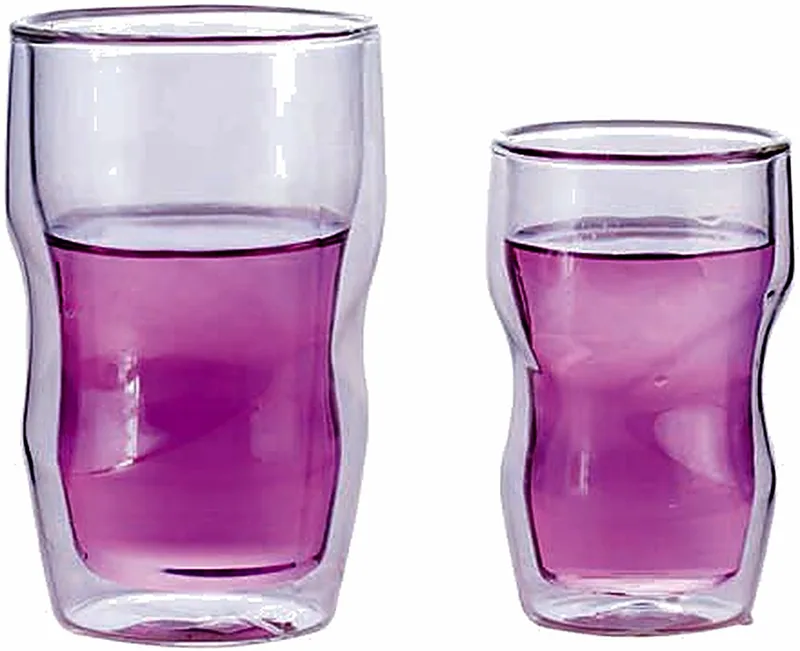
Double-wall contour glasses (TVD-1958): a shaped handleless glass in two sizes
Moulded contour double-wall glasses shown in two sizes, with no handle or lid. Learn who they suit and what to confirm before ordering.
The Double-Wall Contour Glasses (TVD-1958) are double-wall glasses with a moulded contour body, shown in two sizes. They have no handle, no lid and no colour: the appeal is the sculpted shape of the glass itself. That makes them a different buy from the handled cups in the Double-Wall Glassware line, and this guide is about where a shaped, handleless glass earns its place and what a buyer should confirm before ordering.
What a moulded contour body is for
A contoured body has a waist or a curve that your hand can find. That helps grip, particularly with a cold drink where condensation makes a straight glass slippery, and double-wall construction keeps the outside from sweating as much. It also gives the glass a recognisable silhouette on a shelf or a bar. Where a plain tumbler is a commodity, a shaped glass can carry a place on a cocktail list or a menu description.
Two sizes: why that matters
Our listing shows two sizes. Two sizes let one design cover two jobs, for example a larger glass for iced coffee or a long drink and a smaller one for a short pour, juice shot or dessert. For a retailer, it makes a sensible two-tier display: a pair of large glasses and a pair of small ones in the same style. The capacity of each size is not in our listed features, so exact millilitres are confirmed on your written quote. Ask for both volumes before you design your menu or your gift box.
Who buys contour glasses
- Bars and restaurants that want a house glass with a distinct shape for cold drinks and desserts.
- Cafés serving iced coffee, smoothies or cold brew who want a glass that stands out from a plain tumbler.
- Hotels equipping a breakfast room, where a handleless glass works for juice and water as well.
- Gift shops and online sellers offering matched glasses in two sizes as a boxed set.
Specification points that are specific to this glass
- Volume of each size and the overall height, so the glasses fit your fridge shelves and dishwasher racks.
- Wall thickness at the waist. A moulded contour can have thinner or thicker sections; ask where the factory checks for weak points.
- Nesting and stacking. Contoured glass may not stack like a straight tumbler. Ask whether the glasses can nest for storage or need divider packing.
- Hot use. Confirm whether the factory states the glass is suitable for hot drinks as well as cold; do not assume.
- Variation. The line is typically hand-made, so confirm tolerance on weight and capacity if you are selling a matched pair.
- Packing. Individual boxes, a two-size gift set or bulk with dividers, plus barcode and carton size.
Choosing between this and other glasses
Choose the contour glass when shape is the selling point and you do not need a handle. If you want a handle, the Double-Wall Latte Glass with Handle (TVD-1946) and the Double-Wall Teardrop Tea & Coffee Cup (TVD-1951) are the options. For a plain handleless cup, the Double-Wall Glass Cup – Round (TVD-1936) is simpler. For colour, see the coloured tumbler guide. A common range plan is one plain tumbler for volume and the contour glass as the premium upgrade.
Canadian rules that apply
These are glasses that contact food and drink. The Glazed Ceramics and Glassware Regulations limit lead and cadmium that can leach from glassware that contacts food; decorated or printed pieces are the main risk, and plain contour glass has less of it, though a lead and cadmium report is still the usual request. The Food and Drugs Act prohibits selling food in or with materials that may make it harmful, and Health Canada does not pre-approve kitchenware, so buyers also ask for a food-contact test report from the factory. No certification mark is on file for TVD-1958, so we make no certification claim. We confirm certification status and supply the documents with the quote before you order. If you sell the glasses in a printed gift box, the Consumer Packaging and Labelling Act requires bilingual identity and net quantity plus the dealer's name and place of business, and Quebec requires French on labels and instructions. Rules change; confirm with the authority or your customs broker. This is not legal advice. The Canadian rules for double-wall glassware explains the whole line.
Canadian use notes
Handleless glass goes from fridge to counter to dishwasher many times a day in a busy venue, so check the sample for chipping at the rim after repeated washing. Winter freight can freeze cartons; allow them to warm to room temperature before unpacking. If you plan to freeze drinks or use the glass in a cold room, ask what the factory advises about thermal shock.
Ordering
Every order is quoted in writing for your quantity, the size split and your delivery address. Pricing is never posted on the site. The quote confirms lead time, packing and the certification documents. Many lines have low trial minimums; samples are available on most items and the sample cost is usually credited to your first order. Payment is 30% deposit and 70% before release, and the glasses can share a consolidated container with products from other factories. See how ordering works, the landed cost calculator for a first landed-cost estimate and the sales tax by province guide. Request a quote with the quantity of each size. Browse related items in the Home Kitchen & Tableware.