Certification guide ·
Floral Swing-Lid Bin – Round Top (TVD-10293): Canadian compliance guide
No certification mark is on file for this printed swing-lid bin. Which rules apply depends on what the bin will hold, and here is how to ask for the right documents.
The compliance position for TVD-10293 in one paragraph
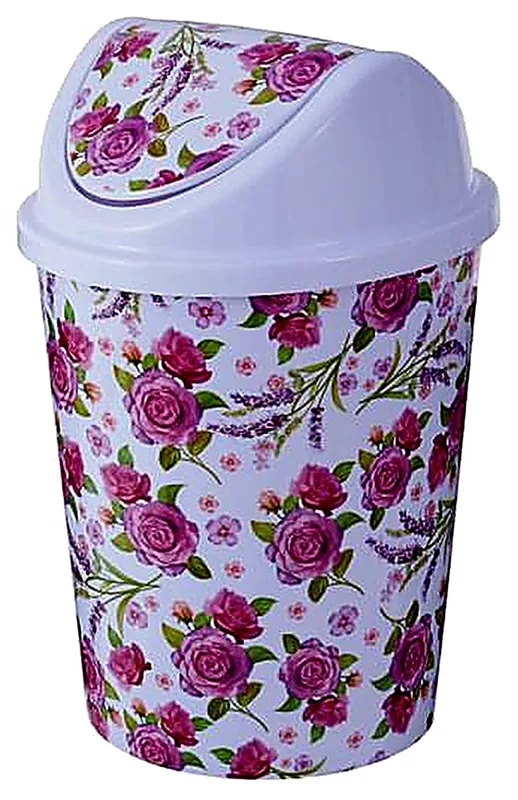
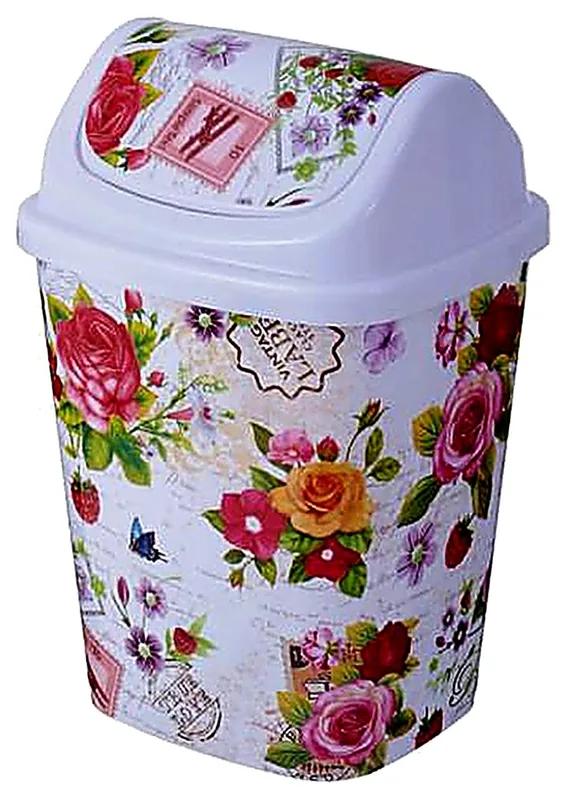
The Floral Swing-Lid Bin – Round Top (TVD-10293) is a printed swing-lid bin sold in sizes from 2.5 L to 10 L, with plain lilac versions in the same family. No certification mark is on file for this item. There is no mark to quote and none that we imply. We confirm certification status and supply the documents with the quote before you order. What follows explains which Canadian rules a printed bin like this one can run into, depending on what you will use it for, so you can ask for the right paperwork.
Start with the use, not the product
A swing-lid bin is a container, and the rules that apply depend on what goes in it and who handles it. Our listing shows a printed design, a swing lid and a size range. It does not say the bin is food-grade, so we treat the three common uses separately.
- Waste and laundry use. Bathroom, bedroom, office or laundry-room bins do not hold food. The relevant rules are general consumer product safety and labelling.
- Dry goods or pantry storage. If a version is sold to hold food, the food-contact rules below apply and you will want test reports for the plastic and the print.
- Children's rooms. A pastel or floral bin in a nursery or play room raises the surface coating and lead questions for children's products. Do not market it that way unless the quote confirms it.
Rules that can apply
- Canada Consumer Product Safety Act. It prohibits consumer products that are a danger to human health or safety, requires incident reporting and allows recalls. A swing lid is a moving part, so ask about pinch points and whether the lid can detach.
- Food and Drugs Act. If a bin will hold food, selling food in or with materials that may make it harmful is prohibited. Health Canada does not pre-approve kitchenware. Buyers commonly ask the factory for food-contact test reports.
- Surface Coating Materials Regulations. They set limits on lead (90 mg/kg) and mercury in paints and coatings on furniture and on children's products. If the printed design is a coating on a bin that is sold for a child's room, ask for the coating test result.
- Consumer Products Containing Lead Regulations. These include limits that cover kitchen utensils and products for young children.
- Consumer Packaging and Labelling Act. Prepackaged consumer products need bilingual product identity and net quantity, plus the dealer's name and place of business.
- Quebec. Labels, instructions and warranty documents must be available in French, at least as prominent as any other language.
Glass and glazed ceramic rules do not come into it unless you tell us a version is made of those materials. Our listing shows a bin with a swing lid, not a bowl or a mug.
Document checklist
| Document | Why you want it | Who issues it |
|---|---|---|
| Material declaration for body and swing lid | Tells you whether food-contact testing is relevant | Factory, confirmed on the quote |
| Food-contact test report | Needed only if the bin will hold food | Test laboratory, via the factory |
| Print and coating test result | Covers lead and mercury in the printed decoration | Test laboratory, via the factory |
| Size and capacity sheet, 2.5 L to 10 L | Lets you label capacity accurately | Factory |
| Bilingual label proof | Identity and net quantity in English and French | Dealer, with our packing proof |
| Carton specification | Nested bins and lids need defined pack-out | Factory, confirmed on the quote |
Marks that do not apply, and one that does not help
This is not an electrical product, so the CSA, cUL and cETL marks in CSA, cUL and cETL marks explained are not required for it. Canada also does not recognise the European CE mark as proof of compliance for consumer products. A CE declaration from the factory can sit in the file, but it replaces nothing.
Provincial and retailer differences
The federal rules above are the same in every province. What changes is language and the buyer. Quebec retailers ask for French on labels and instructions. National chains often add their own product safety questionnaire, and they may ask for a test report that the law itself does not name. Confirm what your retail customer or tender actually requires before you place the order.
What happens if paperwork is missing
- Your retail buyer can refuse to list the line until the documents arrive.
- Stock labelled in English only can be stopped before it reaches a Quebec store.
- If a product is found to be dangerous, Health Canada can require a recall, and a printed bin with a swing lid is no exception to that rule.
How we handle it
We ask the factory for the material declaration and any available test reports, then state on the quote which documents exist and which do not. If something is missing, you can ask us to arrange a sample for testing before you commit to a container. Rules change, and this is not legal advice, so confirm with Health Canada, your inspector or your customs broker.
The same print family also comes as the Rose Swing-Lid Bin (TVD-2724), and the Rose Swing-Lid Bin (TVD-2724) guide compares the colours and sizes. If your plan includes bowls as well as bins, the blue floral lidded bowls compliance guide and blue floral lidded bowls buying guide cover the lidded bowl side. For other pieces in the line, see the pastel floral nesting boxes compliance guide and the line-wide compliance guide. Send a quote request with your quantity and delivery address, read how ordering works for the 30% deposit and 70% before release, and use the landed cost calculator to estimate your landed cost.