Product guide ·
Rectangular Glass Containers, Smooth (TVD-1872) or Ribbed (TVD-1878)
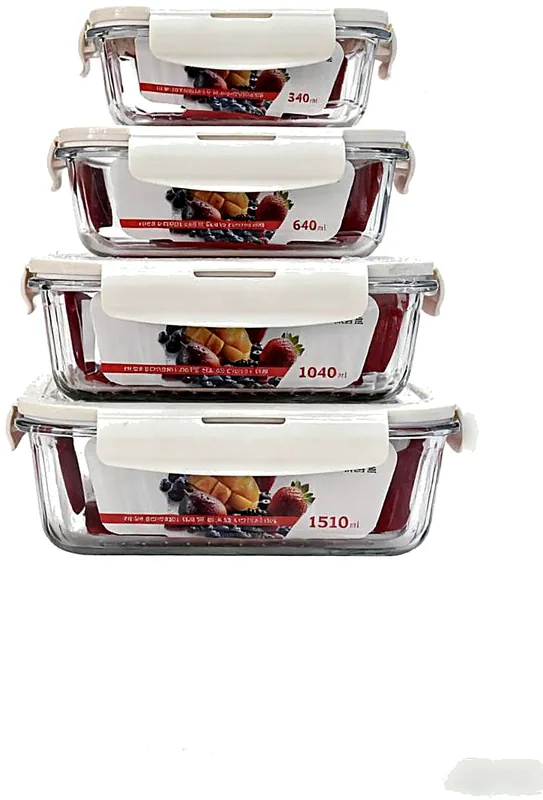
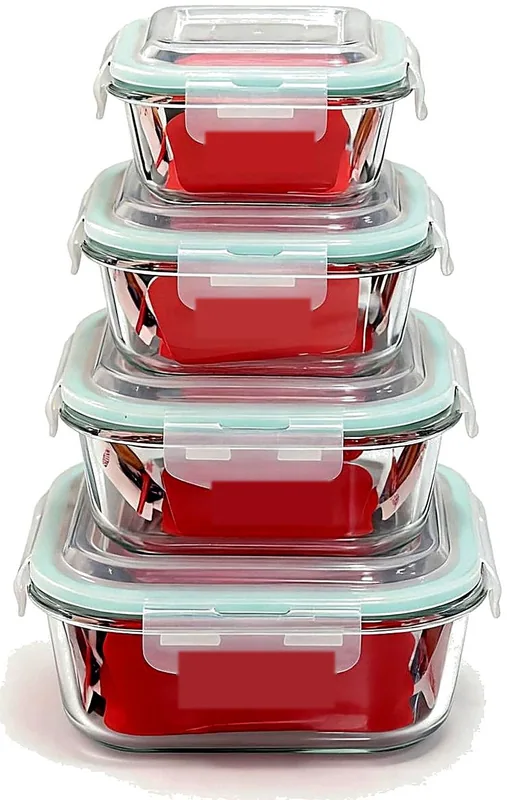
Two rectangular borosilicate glass container sets, one smooth and one ribbed. They share one core specification, so the decision comes down to look, handling and how your customers store them.
Two rectangles, one specification, one visible difference
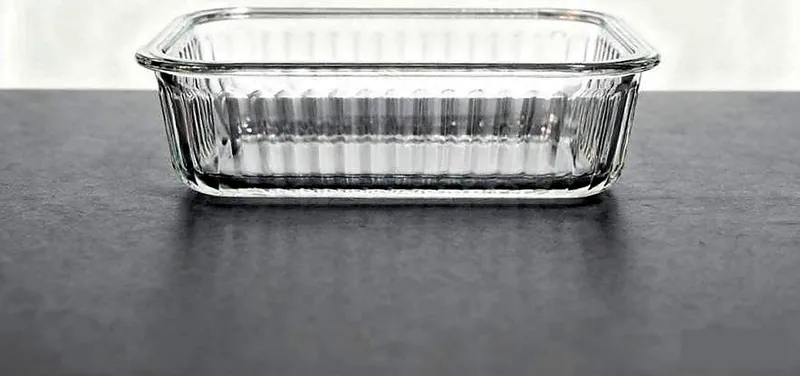
TVD-1872 (Rectangular Glass Containers – Smooth) and TVD-1878 (Ribbed Rectangular Glass Containers) are both rectangular containers with borosilicate glass bodies. That shared specification is the honest summary. The first has plain walls and is described as lidded sets in several sizes. The second has ribbed sides, a stackable design and several sizes. If you came looking for a technical gulf between them, there is not one in what we can publish; the gap is in surface texture and presentation, and that is exactly how buyers should think about it.
Side-by-side summary
| Question | TVD-1872 smooth | TVD-1878 ribbed |
|---|---|---|
| Glass | Borosilicate glass bodies | Borosilicate glass with ribbed sides |
| Shape | Rectangular, lidded sets | Rectangular, stackable |
| Sizes | Several, exact sizes on the quote | Several, exact sizes on the quote |
| Look | Clean, clear walls that show contents | Textured sides with a decorative grip |
| Lid details | Confirmed on the quote | Confirmed on the quote |
How to choose
Choose smooth (TVD-1872) when the food is the display. A clear, smooth wall lets customers see layers in a salad, a lasagne portion or a bento row, which is why delis, meal-prep brands and cafés often prefer plain walls. Smooth sides also take a printed or stuck-on label more neatly, and are simpler to check for residue after a wash.
Choose ribbed (TVD-1878) when the container itself is the product on a shelf. Ribbing catches light, gives a better grip with wet hands and adds a gift-shop feel to a retail display. Its stackable design is one of its stated features, so it also serves home-storage retailers who sell the idea of tidy cupboards.
For many retailers the answer is both: smooth as the volume seller, ribbed as the step-up. Because they share a core specification, you can plan one set of customer instructions for cleaning and fridge-to-table use, subject to the ratings confirmed on your quote.
Buyers each one suits
- Meal-prep businesses filling hundreds of portions a week: smooth walls for faster visual checks.
- Housewares retailers: ribbed for gifting and home-organisation displays, smooth for everyday volume.
- Delis and caterers: smooth, with a label on the clear wall.
- Online sellers: both, since the contrast photographs well side by side.
Mixing them in one order
Order a few cartons of each in the sizes that match your portions and use the first sample cycle to run real tests: fill, close, stack, wash, repeat. Write down which sizes stack together, because ribbed sides and smooth sides do not necessarily nest in each other. A mixed order can share a consolidated container with other products from our range. Minimum order per item is confirmed in writing.
Specification checklist for the quote
- Capacity and dimensions of each size, and pieces per set.
- Lid material, seal type and whether lids are fitted in the carton.
- Whether the glass and the lid are rated by the factory for oven, microwave, freezer or dishwasher use, as separate ratings.
- Food-contact test reports for the product and the Canadian market.
- Retail packaging, carton quantity, barcode and labelling language.
Other containers worth comparing
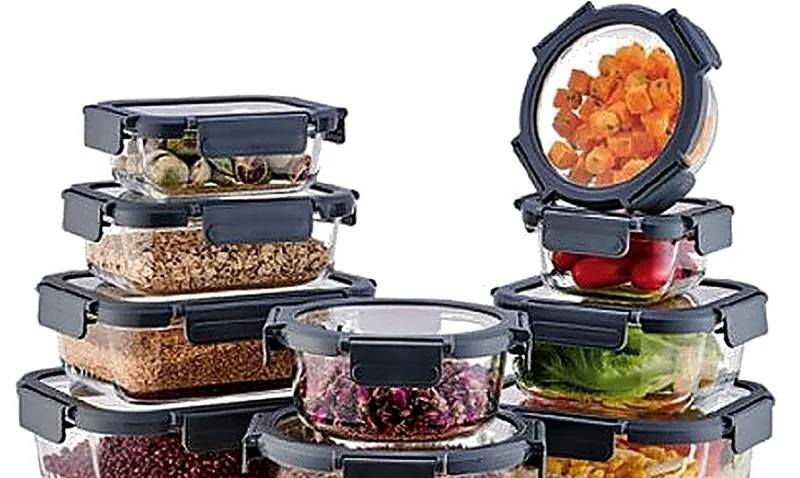
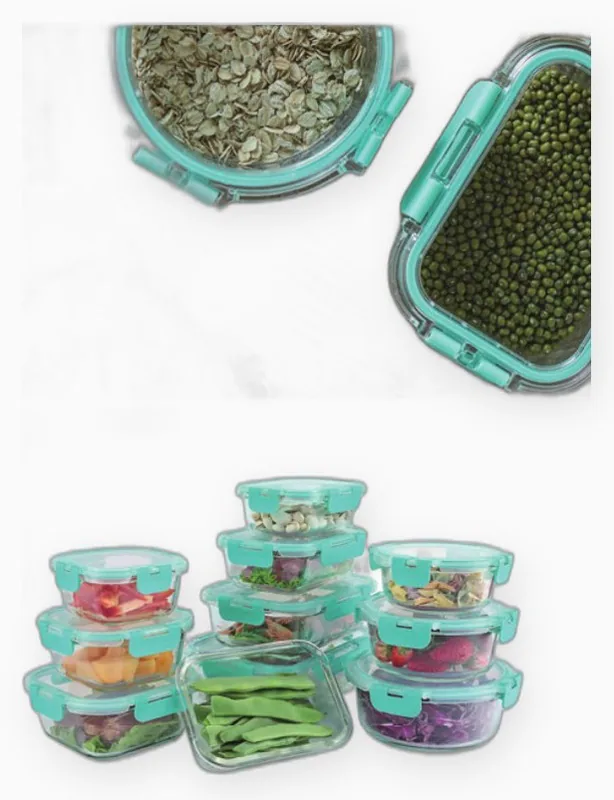
For an all-glass closure look at TVD-776 (Glass-Lid Food Containers, with a vented seal and plastic-free storage). For detachable clip handles look at Glass Containers – Removable Ears (TVD-774) and its compliance notes. For a coloured-lid companion see the blue clip lid collection, the yellow lid ribbed collection or TVD-1869 (square, teal lid).
Canadian notes and rules
The Food and Drugs Act prohibits selling food in or with materials that may make it harmful, and Health Canada does not pre-approve kitchenware, so buyers ask the factory for food-contact test reports. Glass that touches food falls under the Glazed Ceramics and Glassware Regulations, which limit lead and cadmium that can leach. Plain glass is a lower-risk question than decorated glass, but if the version you order has printed or coloured decoration near the lip, ask for a lead and cadmium report. Prepackaged consumer sets need bilingual English and French product identity and net quantity, and Quebec retailers will ask for French on labels and instructions. Confirm current rules with the authority; this is not legal advice. See the food-contact and glass rules for the whole line.
Cold chain matters in Canadian winters: glass should warm to room temperature after delivery before hot food or a dishwasher cycle. Our Canada delivery hub covers freight routes; see the sales tax by province guide for tax by province.
How ordering works
You receive a written quote covering price for your quantity, specification, documents, packing, lead time and delivered cost to your address. We confirm certification status and send documents with the quote before you order. Payment is 30% deposit and 70% before release, samples are available on most items and usually credited to the first order. Start from the quote request page or read how ordering works.