Certification guide ·
Underfloor Heating Mat TVD-1107: Certification and Compliance for Canada
No certificate is on file for this mat. Here is what a Canadian buyer should require, document by document, and what we do about it before an order is placed.
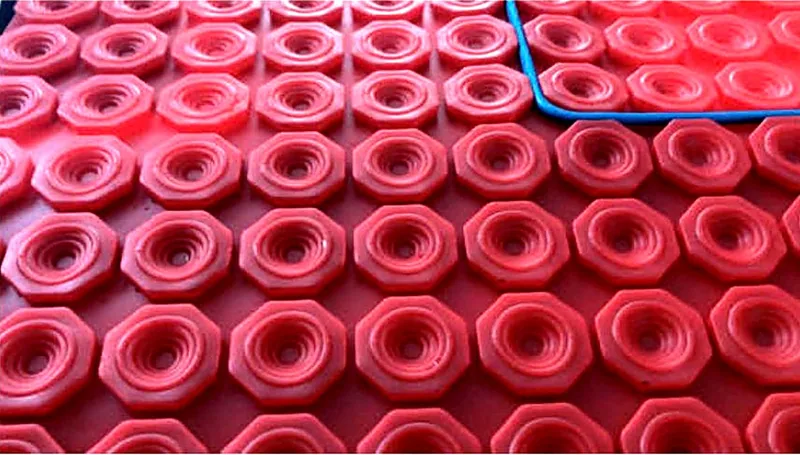
This page is about paperwork for one product: Underfloor Heating Mat (TVD-1107), a studded heating cable mat, 5.6 mm thick, in rolls of 10 to 20 m, that uncouples and waterproofs. If you are looking for what it is and how to use it, read the TVD-1107 buying guide. If you are about to sign a purchase order, read on.
The plain status
There is no certification on file for TVD-1107. We do not say it is certified, listed, approved or compliant with any Canadian standard. A buyer who needs it certified should treat this as a condition of the order, not a detail for later. Before an order is placed we confirm what the factory can supply, give you the documents in writing, and tell you whether a field evaluation would be needed.
Why a heating mat is regulated
A heating cable embedded in a floor is permanently connected electrical equipment that stays hot for hours under a surface people walk on. Electrical products sold or installed in Canada must carry a certification mark from a certification body accredited by the Standards Council of Canada, for example CSA, cUL or cETL, where the small c means Canada. The other route is a field evaluation or special inspection label from an accredited body. Provincial and territorial electrical safety authorities enforce this, for example the Electrical Safety Authority in Ontario. Inspectors can refuse uncertified equipment, and an insurer may question a heated floor that failed an inspection.
CE and US marks are not the answer
Canada does not recognize the European CE mark as proof of compliance for electrical products. A CE-marked mat still needs the Canadian requirements. A US-only mark, UL or ETL without the small c, is not enough either. Our guide to CSA, cUL and cETL marks sets out how to read each one on a label.
Document checklist
| Document | Why you need it | Who issues it |
|---|---|---|
| Certification certificate with Canadian mark (CSA, cUL or cETL) naming the model | Inspectors look for the mark on the product or the cable label | Certification body accredited by the Standards Council of Canada |
| Field evaluation report and label, if no mark exists | Alternative route to installation approval | Accredited evaluation body, arranged before import |
| Rating data: voltage, frequency, output per area | Matching the mat to Canadian 120/240 V, 60 Hz supply and the circuit | Factory data sheet; confirmed on our quote |
| Installation instructions in English and French | Quebec language rules; warranty and inspection | Factory; checked before order |
| Waterproofing test report, if sold as a waterproof layer | Wet-room use | Test laboratory, via the factory |
| Floor-covering compatibility statement | Warranty for tile, vinyl or wood laid over heat | Factory, and the floor's manufacturer |
Voltage and frequency
Canadian homes have 120/240 V single-phase supply at 60 Hz; commercial buildings often have 208 V or 600 V three-phase. Equipment rated for 220 V and 50 Hz must be confirmed as built for Canadian voltage and frequency before it is ordered. The listing for this mat does not state a voltage, so we ask for it explicitly. A mismatch can mean a mat that does not reach its stated output, or a cable that overheats.
Provincial differences
Each province and territory has its own electrical safety authority, with its own permit and inspection process. Quebec buyers should also expect French-language documents under the Charter of the French language. Some authorities require a permit for any new permanent heating cable. Ask your electrician or authority what applies in your area; we cannot do this for you.
Ask these three questions first
If you read nothing else, ask the factory and your electrician three things. First, does a Canadian mark exist for this exact model, and can we see the certificate? Second, what is the rated voltage and what output does the cable give per square metre? Third, will the floor covering you intend to lay be covered by its own maker's warranty over heat? A clear answer to all three, in writing, is what an installer and an inspector need. A hesitant answer to any of them is a reason to pause the order, not to hurry it.
What happens if something is missing
An inspector may refuse to approve the installation, which can mean lifting a finished floor. An insurer may question a loss traced to unmarked equipment. A retailer may decline to stock it. These costs are far greater than the cost of asking for documents first.
How we handle it
Our written quote states the certification status and lists the documents to follow. If a Canadian mark does not exist, we say so and explain the options, including a field evaluation, before any deposit is taken. Terms are 30% deposit and 70% before release, so you will know the status first. The thermostat that controls the mat has its own file: see the TVD-1108 certification guide. For wood floors laid over heat, see Engineered Oak Flooring (TVD-888) and its certification guide, and the line overview in the hardwood, SPC and laminate compliance guide.
To ask for documents, send a quote request. Rules change, so confirm with your electrical authority, inspector or customs broker. This is not legal advice.